Relapse is one of the most misunderstood parts of recovery. Many people face relapse when recovering from drug or alcohol problems, mental health issues, or both. However, relapse does not mean failure. Instead, it shows the ongoing nature of these health conditions.
Also, relapse gives us valuable information. In fact, it helps us build stronger recovery plans. This guide looks at the science of relapse. Then, it shares proven ways to prevent relapse. Finally, it offers kind paths forward when setbacks happen.
[This content is for learning only. It is not a substitute for diagnosis or treatment. If you have safety concerns or severe symptoms, contact emergency services right away.]
Table of Contents
Five Quick Takeaways
- Relapse reflects chronic conditions, not moral failure.
- Relapse usually moves through emotional, mental, and physical stages.
- Environmental cues and emotions strongly trigger cravings and symptoms, leading to relapse.
- CBT, mindfulness, and refusal skills reduce relapse risk.
- Medication and social support improve stability and recovery strength, preventing relapse.
Rethinking Relapse: Beyond All-or-Nothing Thinking
Recovery isn’t a straight line from sickness to health. Instead, it is a process of learning and growth. Sometimes, you need to adjust your plan. Relapse happens when symptoms of a condition come back. It also happens when someone uses substances again after a period of not using. Understanding relapse as a process helps us create better ways to prevent it.
In the past, people saw relapse as a moral failure. They thought it showed lack of willpower. However, brain science has challenged this view. Now, doctors see substance use disorders as chronic brain conditions. In fact, relapse rates are similar to other medical conditions like high blood pressure and diabetes. Likewise, mental health conditions often follow up-and-down patterns. Symptoms can come and go over time, even with good treatment.
This medical view doesn’t take away your control. Still, it places challenges within a framework. Specifically, it looks at brain vulnerability, triggers from your surroundings, and learned behavior patterns. When we recognize these factors, we can focus on root causes instead of just symptoms.
“Relapse rates for addiction resemble those of other chronic diseases such as diabetes, hypertension, and asthma” (National Institute on Drug Abuse, 2012, p. 11). (ncbi.nlm.nih.gov)
Understanding Why Relapse Happens in the Brain
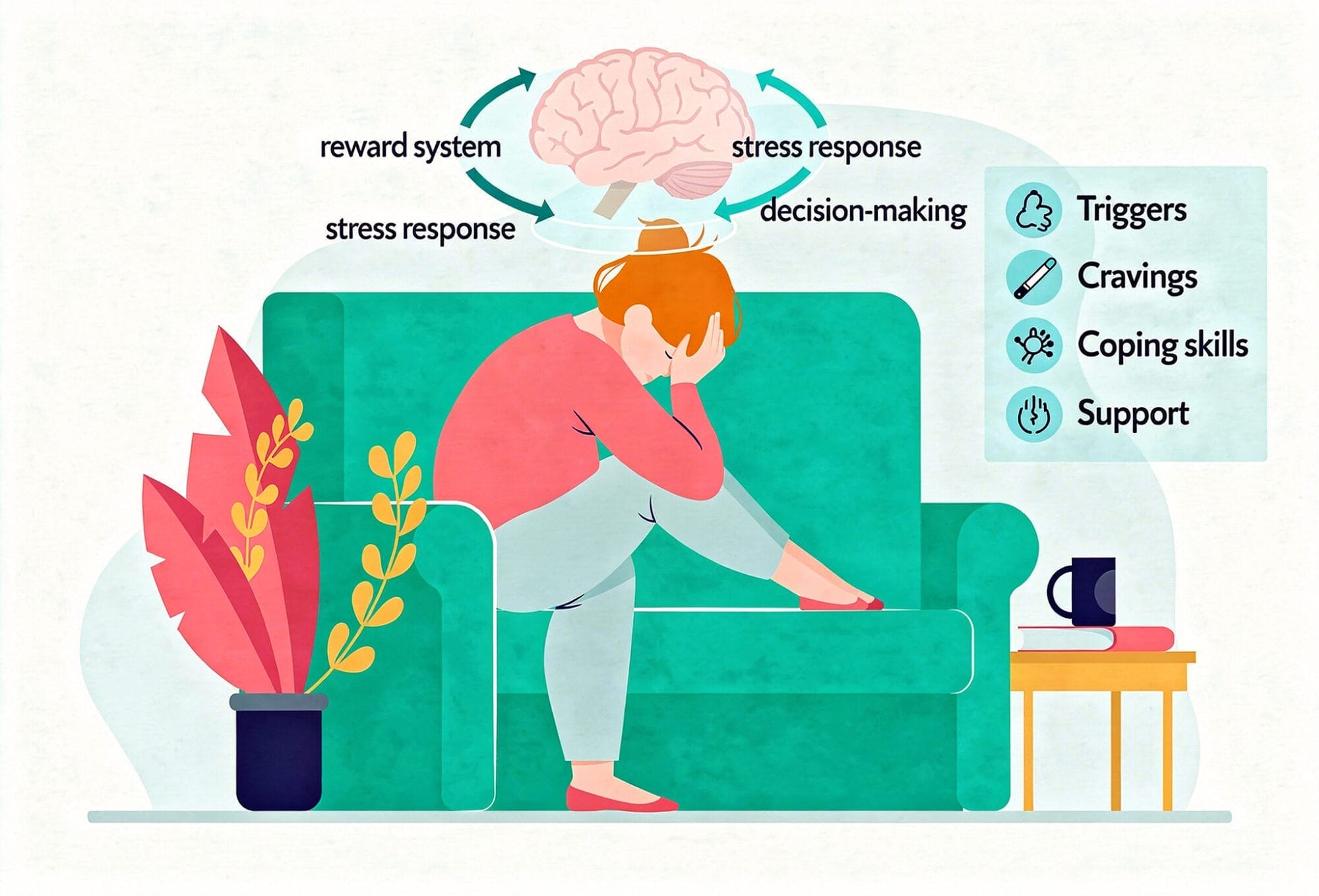
To understand relapse, we need to look at how drugs and mental health conditions change the brain. Long-term substance use changes brain pathways. These pathways control reward, stress response, and decision-making. The brain’s dopamine system controls motivation and pleasure. However, it becomes out of balance. As a result, this creates lasting weakness even after long periods of not using.
The brain can rewire itself. This works in both directions. First, substance use creates deep brain pathways. These link certain cues with drug-seeking behavior. Then, steady recovery slowly rewires these connections. However, this process takes a lot of time. Often, it takes months or years. During this time, people stay at risk for strong cravings. Environmental cues, stress, or emotions can trigger these cravings.
Mental health conditions also involve changes in brain chemistry and circuits. For example, depression affects serotonin and stress chemical systems. Meanwhile, anxiety disorders involve irregular fear responses in the brain’s fear center. Also, bipolar disorder reflects unstable mood control systems. Even with good treatment, these brain weaknesses continue. Therefore, this creates ongoing risk for symptoms to return, which means relapse remains possible.
The Relapse Process: Recognizing the Stages
Relapse rarely happens all at once. Instead, research shows distinct stages. These stages usually come before a return to substance use or worse symptoms. As a result, these stages offer many chances to prevent relapse.
Understanding the Emotional Relapse Stage
The first stage involves emotional and behavior changes. However, it doesn’t yet include active thoughts of using substances. It also doesn’t include deliberately ignoring mental health practices. Warning signs include more isolation, poor self-care, and holding in emotions. Other signs are irregular sleep patterns and skipping support meetings or therapy. During this stage, people may not think about using substances. In fact, they may feel confident about recovery. Yet, their behaviors hurt their stability.
Stress build-up plays a key role here. Without good coping skills, daily stress piles up. Therefore, it slowly overwhelms mental resources. The person may seem to be managing. However, they are running on shrinking reserves. Also, their weakness is growing.
Recognizing Mental Relapse Patterns
As emotional relapse continues, mental relapse appears. This stage involves internal conflict. One part of you stays committed to recovery. Meanwhile, another part thinks about using substances or quitting treatment. This stage also involves actively fantasizing about past substance use. Additionally, it includes downplaying consequences and making past experiences seem better than they were. Furthermore, it involves planning possible use scenarios and lying to create opportunities.
Mental relapse is a critical decision point. The person knows they’re in dangerous territory. However, they haven’t acted on urges yet. Good help during this stage can prevent relapse from getting worse. Furthermore, it gives chances for honest self-review. Also, it allows renewed commitment to recovery plans.
When Physical Relapse Occurs
Physical relapse happens when someone actually uses substances. It also happens when mental health symptoms fully return despite past treatment. This stage can range from a brief lapse to a full relapse. A lapse is a single use followed by going back to recovery efforts right away. In contrast, a full relapse involves long periods of active symptoms or substance use.
Knowing the difference between a lapse and relapse matters. It matters for both medical understanding and personal recovery story. A lapse is a temporary setback. You can address it quickly without giving up on recovery. However, a full relapse usually involves ongoing symptom return. Therefore, it needs more intense help and treatment plan changes.
Common Relapse Triggers Across Conditions
Specific triggers vary by person and condition. Still, research finds common themes. These themes increase relapse risk across substance use and mental health disorders.
How Your Environment and Social Cues Affect You
The brain learns by association. This means that people, places, and situations linked with past substance use become powerful triggers. For example, walking past a former using location can trigger cravings. Similarly, meeting people linked with past substance use can trigger urges. Even specific times of day can trigger cravings. For mental health conditions, environments linked with past episodes can trigger symptom return. These might include places where manic spending or sad isolation happened.
Social pressure is another strong trigger. This is especially true early in recovery. Well-meaning friends may not understand how serious substance use disorders are. As a result, the desire to fit in can overwhelm commitment to staying clean. Likewise, social expectations around being productive can trigger mental health symptoms. This happens when people feel pressured to hide struggles or keep up unsustainable functioning.
Impact of Emotional States and Stress
Both positive and negative emotions can lead to relapse. First, negative emotions like anxiety, depression, anger, loneliness, and boredom often drive substance use. People use as self-medication or distraction. These uncomfortable feelings create urgency for relief. Also, substances or harmful behaviors offer quick but temporary escape.
Oddly enough, positive emotions and celebrations also increase relapse risk. Success, achievement, and joy may be linked with “rewarding” yourself with substance use. They may also trigger thoughts like “I’m doing well enough to handle occasional use.” For mental health conditions, positive stress from major life changes can disrupt routines. These changes might include new jobs, relationships, or moves. Therefore, these changes can trigger symptoms even though they’re objectively good developments.
How Physical Factors Influence Weakness
Physical health greatly affects relapse risk. Chronic pain, illness, tiredness, hunger, and poor sleep all hurt decision-making and emotion control. The acronym HALT captures this truth. It stands for Hungry, Angry, Lonely, Tired. It reminds people that basic physical needs directly affect mental stability.
Hormone changes can also intensify mental health symptoms and cravings. This is especially true during menstrual cycles. Also, medical conditions requiring pain treatment create specific challenges for people in recovery from substance use disorders. As a result, this requires careful teamwork between addiction specialists and other doctors.
Co-Occurring Disorders: Added Complexity
Sometimes substance use disorders and mental health conditions happen together. This situation affects nearly 50 percent of people with severe mental illness. When this happens, relapse risks multiply. Co-occurring disorders create two-way weakness. Mental health symptoms increase substance use risk. Meanwhile, substance use worsens mental health symptoms. Therefore, relapse becomes more likely.
“Adults with severe mental illness have extraordinarily high rates of co-occurring substance use disorders, typically around 50% or more” (Drake et al., 2007, p. 131). (PubMed)
For example, someone with depression and alcohol use disorder faces complex interaction. Specifically, alcohol’s depressing effects worsen mood. At the same time, untreated depression drives drinking as self-medication. Similarly, anxiety disorders paired with anti-anxiety medicine dependence create similar cycles. Also, people with bipolar disorder may use substances during manic episodes. They lose control and good judgment. Then, they face worse depression during the crash phase. This cycle increases relapse risk.
Good treatment requires combined approaches. Both conditions must be addressed at the same time instead of one after another. Recovery planning must account for how each condition affects the other. Additionally, it should develop plans that keep both conditions stable. This might mean recognizing that mental health symptom return increases substance use weakness. Therefore, you should strengthen support ahead of time during those periods to prevent relapse.
Proven Relapse Prevention Strategies
Preventing relapse requires active, ongoing effort. It’s not just about staying away from substances. Instead, research shows specific techniques that greatly reduce relapse risk.
Cognitive-Behavioral Approaches
Cognitive-behavioral therapy teaches people to recognize thought patterns that come before relapse. Then, it helps develop other responses. This includes spotting thinking errors. For example, all-or-nothing thinking, catastrophizing, and selective attention fuel cravings or symptoms. By challenging these automatic thoughts and replacing them with more balanced views, you reduce the power of triggers. Therefore, relapse becomes less likely.
Behavior skills training focuses on practical strategies. For instance, it teaches drink or drug refusal skills. It also teaches managing urges through distraction or delay tactics. Furthermore, it teaches problem-solving methods for high-risk situations. Role-playing and practice prepare people to handle tough scenarios before facing them in real life. Therefore, this builds confidence and skill. As a result, it prevents relapse.
Mindfulness and Acceptance Practices
Mindfulness-based relapse prevention combines meditation with relapse prevention plans. Specifically, it helps people observe cravings and uncomfortable emotions without automatically reacting. This approach recognizes that trying to suppress or avoid difficult internal experiences often makes them worse. Oddly, accepting their presence reduces their intensity and length. Consequently, relapse becomes less likely.
Urge surfing shows this principle. Instead of fighting cravings, you watch them with curiosity. You notice physical sensations, thoughts, and emotions without judgment. Like ocean waves, cravings naturally rise and fall. This happens if you allow them to run their course without fighting them. This practice shows that cravings are time-limited and bearable. As a result, it reduces their threat. Therefore, it helps prevent relapse.
Medication-Assisted Treatment Options
For substance use disorders, medications greatly reduce relapse rates. These include methadone, buprenorphine, naltrexone, and acamprosate. They work by balancing brain chemistry, reducing cravings, or blocking substance effects. Despite ongoing stigma, medication-assisted treatment is the gold standard of care. This is especially true for opioid use disorders. Therefore, it strongly prevents relapse.
Mental health conditions also benefit from medicine. Mood stabilizers, antidepressants, and antipsychotic medicines address underlying brain chemical imbalances. Consequently, they reduce symptom severity and relapse risk. Taking medicine as prescribed is a critical relapse prevention strategy. It requires ongoing teamwork with prescribers to optimize treatment plans and address side effects.
Social Support and Recovery Communities
Connection fights the isolation that fuels both substance use and mental health symptoms. Mutual support groups provide community, accountability, and shared wisdom. These include Alcoholics Anonymous, SMART Recovery, and Depression and Bipolar Support Alliance. They help prevent relapse through peer support.
Recovery coaching and peer support specialists offer unique value. These are people with lived recovery experience. They model successful recovery and provide hope based on real understanding. Also, professional therapeutic relationships with counselors and therapists provide structured support. Meanwhile, personal relationships with friends and family who understand recovery needs offer daily support. Together, these connections help prevent relapse.
Lifestyle Balance and Wellness Practices
Lasting recovery requires attention to basic wellness areas. First, regular exercise reduces anxiety and depression. It also improves sleep and provides healthy dopamine release. Second, nutrition supports brain chemistry and overall health. Meanwhile, enough sleep protects decision-making and emotion control. Therefore, these practices help prevent relapse.
Meaningful activities and purpose fight the emptiness that can follow stopping substance use or symptom relief. Developing new hobbies, volunteer work, school goals, or career development fills time. This time was previously spent on substance use or symptom management. Furthermore, these activities build identity beyond illness. They also provide engaging alternatives. As a result, they reduce relapse risk.
Responding to Relapse: Creating Paths Forward
Despite best efforts, relapse sometimes happens. How people and support systems respond decides whether a setback becomes a major problem or a valuable learning opportunity.
Immediate Safety and Assessment
The first priority is ensuring physical safety. Substance use after long abstinence dramatically increases overdose risk. This happens because of reduced tolerance. Therefore, this requires immediate medical attention if concerning symptoms develop. Mental health symptom return may require crisis help, hospital care, or medicine adjustments. The severity decides what’s needed.
Once immediate safety is handled, honest review of relapse circumstances provides crucial information. What specific triggers came before the episode? What warning signs were present? What protective factors were missing or weakened? This analysis isn’t about assigning blame. Instead, it’s about identifying specific weaknesses to address. Therefore, it helps prevent future relapse.
How to Recommit Without Shame
Shame is one of recovery’s greatest obstacles. After relapse, intense self-criticism and despair can fuel continued substance use. It can also fuel symptom cycling through the belief that “I’ve already failed, so I might as well continue.” Fighting shame requires deliberately rethinking relapse. See it as information instead of identity.
Kind self-talk acknowledges difficulty without harsh judgment. For example, statements like “I’m struggling and need more support” differ greatly from “I’m a failure who can’t do anything right.” This difference allows people to seek help instead of hiding in shame. As a result, it speeds up return to recovery efforts. Therefore, it reduces relapse duration.
Making Treatment Plan Changes
Relapse shows that current strategies are not enough. Therefore, this requires treatment plan adjustments. This might mean going to therapy more often. It might also mean adding or changing medicines. Furthermore, it might mean attending more support meetings. Additionally, it might mean addressing previously unrecognized co-occurring conditions. Higher levels of care like intensive outpatient programs or residential treatment may be needed to prevent future relapse.
Crucially, relapse shouldn’t result in punishing treatment approaches. It also shouldn’t lead to discharge from programs. Evidence-based addiction medicine recognizes relapse as an expected part of chronic disease management. Consequently, it requires intensified help instead of abandonment. Therefore, treatment should increase, not stop, after relapse.
Building Long-Term Strength Over Time
Recovery deepens over time. New brain pathways strengthen. Coping skills become habits. Also, life circumstances stabilize. Long-term strength comes from sustained commitment to practices. These practices support mental flexibility and adaptive responding to life’s challenges. Therefore, relapse becomes less likely over time.
Ongoing self-monitoring helps people recognize early warning signs. This happens before full relapse develops. Regular check-ins about emotional state, behavior patterns, and commitment level create chances for course correction. Many people use organized tools. These include mood tracking apps, recovery journals, or weekly self-assessment questionnaires. These help people stay aware. Therefore, they can catch relapse warning signs early.
Continued growth mindset views recovery as evolving instead of static. As circumstances change, recovery strategies must adapt too. Changes might include relationships, careers, or life stages. What worked early in recovery may need changes years later. Therefore, this requires ongoing willingness to experiment and adjust. This flexibility prevents relapse when life changes.
Recovery ultimately means building a life where substances or unmanaged symptoms are not needed. This happens because life itself becomes rewarding. This doesn’t mean life becomes easy or problem-free. Instead, it means you develop enough skills, support, and meaning to handle difficulties. You don’t need destructive coping methods. Therefore, relapse becomes unnecessary.
Let Resa Help You Have Fewer Relapses, Then No More
Understanding relapse is the first step. However, putting proven prevention strategies into practice requires structured support. Resa Treatment Center specializes in helping people with substance use disorders, mental health conditions, and co-occurring disorders. We help you develop the exact skills outlined in this guide. We do this through Intensive Outpatient (IOP) and Standard Outpatient (OP) programs.
Treatment combines several approaches. First, Cognitive Behavioral Therapy helps with relapse prevention planning and trigger identification. Second, Dialectical Behavior Therapy builds distress tolerance and emotion control. Third, Motivational Interviewing strengthens commitment during uncertain moments. Additionally, Medication-Assisted Treatment addresses brain vulnerabilities. Furthermore, individualized planning ensures strategies match your unique relapse patterns.
What sets Resa’s approach apart is graduated care. As you show stability and strengthen coping skills, treatment intensity adjusts accordingly. Consequently, this supports lasting long-term recovery instead of abrupt transitions. Crisis support stays available when warning signs appear. Therefore, this provides safety nets during weak periods. As a result, relapse can be caught early and prevented.
Recovery happens slowly. With each intervention, relapses become less frequent and less severe. This continues until stable wellness becomes your baseline. If you’re ready to turn understanding into action, Resa offers the complete, caring support that makes lasting recovery possible. Together, we can reduce relapse until it stops completely.
A Relapse Is Data to Help Avoid Future Relapse
Relapse doesn’t define your recovery journey. Instead, your response to it does. Each setback offers crucial information for strengthening your approach. It also builds strength. Professional support turns understanding into lasting change. This happens through proven strategies tailored to your needs. Recovery remains possible no matter how many times you’ve stumbled before. Each relapse teaches you more about preventing the next one.
FAQs – Frequently Asked Questions
What Does Relapse Mean In Recovery?
Relapse is the return of symptoms or substance use after improvement. It reflects a chronic condition’s course, not a personal failure. Therefore, relapse is a normal part of recovery.
Is Relapse A Single Event Or A Process?
Relapse usually unfolds in stages over time. Emotional and mental changes often come before physical return to use. Therefore, you can catch and prevent relapse at different stages.
What Are Early Warning Signs To Watch?
Common signs include isolation, poor sleep, holding in emotions, and skipping support. Also, increasing stress without healthy coping raises weakness. Catching these signs early prevents full relapse.
Which Triggers Commonly Increase Relapse Risk?
People, places, and situations linked to past use trigger cravings. Also, strong emotions, celebrations, illness, tiredness, and poor sleep influence relapse risk. Understanding your triggers helps prevent relapse.
How Can People Prevent Or Reduce Relapse?
Use CBT skills, mindfulness, and refusal strategies for high risk situations. Also, medication, social support, and healthy routines strengthen long term stability. Therefore, these tools reduce relapse risk.
How Does Resa Support Relapse Prevention?
Resa uses CBT, DBT, and Motivational Interviewing to build coping skills. Programs include IOP, OP, and Medication Assisted Treatment with individualized planning. Therefore, Resa provides complete relapse prevention support.
Who Can Start Care At Resa, And How Fast?
Adults 18 and older are eligible for outpatient care. Rolling admission starts most patients within two to four days. Therefore, you can get help quickly to prevent relapse.