
Sleep is more than just rest. Instead, it’s a basic need that affects your mental health and emotions. For people dealing with drug or alcohol problems or mental health challenges, sleep hygiene is one of the most powerful tools you can use. Plus, this proven skill set gives you clear paths toward better mental stability and lasting wellness.
[This content is for learning only. It is not a substitute for diagnosis or treatment. If you have safety concerns or severe symptoms, contact emergency services right away.]
Table of Contents
Five Quick Takeaways
- Consistent wake times anchor your sleep-wake cycle.
- Morning light exposure strengthens your sleep timing.
- Keep bedrooms cool, dark, and quiet for sleep.
- Use beds only for sleep and sex.
- Begin wind-down routines 60 to 90 minutes before bedtime.
Sleep and Mental Health: A Two-Way Connection
Sleep and mental health have a complex relationship. In fact, each one strongly affects the other. Mental health disorders disrupt your sleep patterns. At the same time, poor sleep makes mental health symptoms worse. Research shows that about 50-80% of people with mental health conditions have major sleep problems. In comparison, only 10-18% of people without mental health issues face these challenges.
“Additionally, sleep problems affect 50% to 80% of people under the care of a psychiatrist, compared with 10% to 18% of adults in the general U.S. population.” (Mental Health America, n.d.) — Get Enough Sleep (Mental Health America)
The brain processes behind this connection are deep and wide-reaching. During sleep, your brain does critical maintenance work. For example, it stores memories and clears out waste. Also, it balances brain chemicals and repairs the pathways involved in processing emotions. However, when sleep becomes broken up or too short, these important functions don’t work well. The front part of your brain becomes easy to harm from lack of sleep. As a result, this weakens your mental strength for managing cravings.
Depression and sleep problems show particularly connected patterns. In fact, they make each other worse. About 75% of people with depression have trouble sleeping. Furthermore, long-term insomnia increases the risk of major depression by ten times. Similarly, anxiety disorders connect with being overly alert, which makes sleep very hard.
Drug and alcohol use adds to these challenges in many ways that affect sleep patterns. Many substances seem to help sleep at first. However, they actually harm sleep quality. For instance, alcohol, sedatives, and marijuana may help you fall asleep faster at first. But they reduce deep REM sleep and disrupt your overall sleep pattern through the night. During early recovery, your brain must rebalance its chemical systems that adapted to the substance. As a result, this often leads to severe insomnia that can last for months. Because of this rebalancing period, sleep hygiene practices become especially important for lasting recovery.
“And among people with depression, 75% have trouble falling asleep or staying asleep.” (Johns Hopkins Medicine, n.d.) — Depression and Sleep: Understanding the Connection (Hopkins Medicine)
Sleep Hygiene as a CBT Skill: Core Framework
In cognitive behavioral therapy, sleep hygiene works as a behavioral tool that addresses many factors. Specifically, it targets environmental, physical, and mental elements that affect sleep quality. Unlike more structured CBT-I techniques, sleep hygiene focuses on creating the best conditions naturally.
The CBT framework views sleep hygiene through many connected lenses for complete treatment. Behaviorally, it means creating consistent routines and stopping practices that mess with sleep. Mentally, it addresses unhelpful beliefs and anxious thoughts about not sleeping. Physically, it recognizes that sleep is controlled by two main systems working together. First, the sleep drive builds pressure throughout the day while you’re awake. Second, your sleep-wake cycle controls timing.
For people managing mental health or substance use challenges, sleep hygiene has many benefits. First, it provides structure during chaotic times. Next, it offers concrete behavioral goals. Furthermore, it creates real evidence of self-care that reinforces your recovery identity. Most importantly, it represents a skill that’s completely within your control.
Core Sleep Hygiene Practices: Your Foundation
Good sleep hygiene starts with understanding that you can’t force sleep. Instead, you can only help it along. The following practices create conditions that let your natural sleep systems work their best.
Sleep-Wake Cycle Strategies
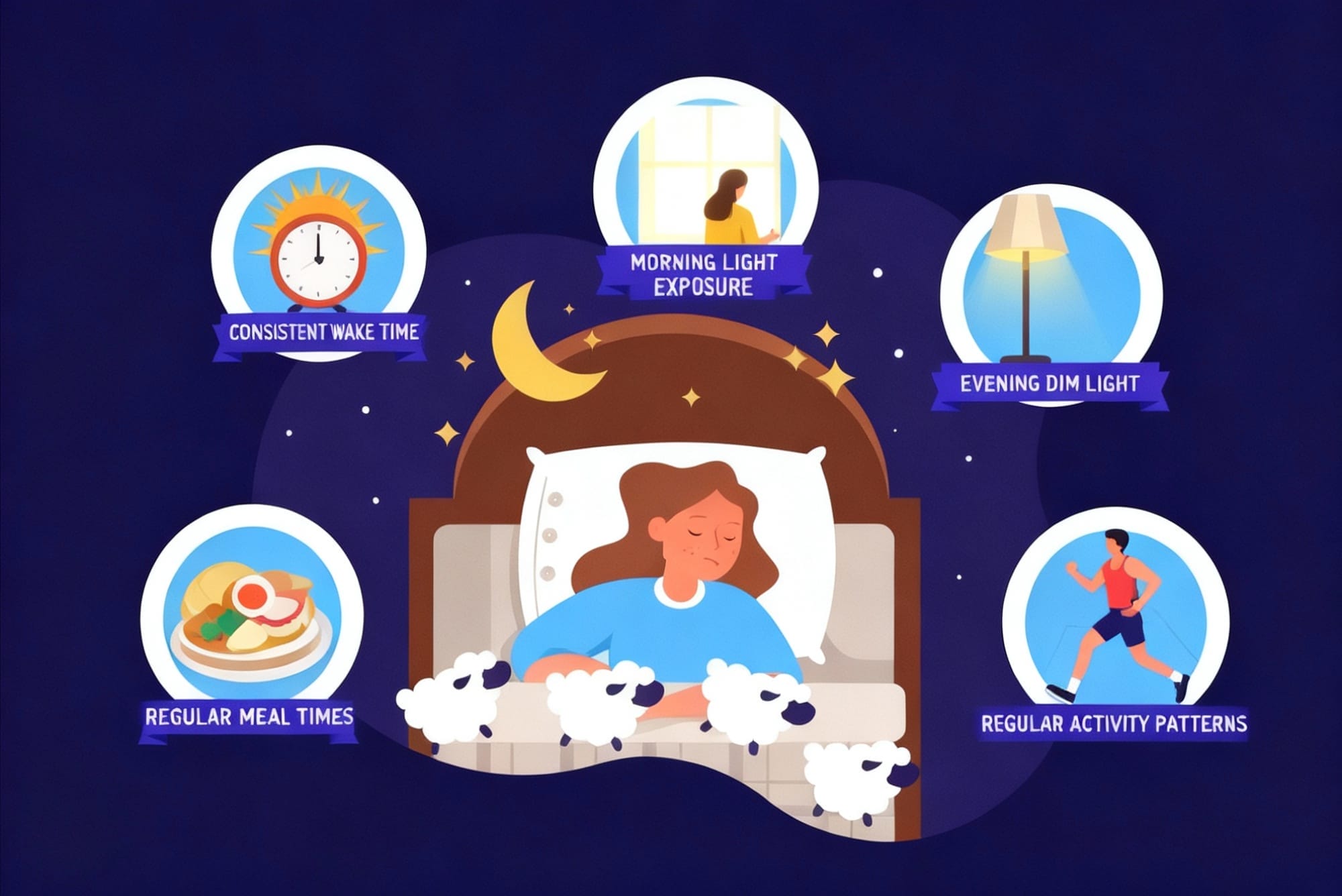
Your sleep-wake cycle responds mainly to light, meal times, and activity patterns. Therefore, consistency in these areas creates reliable brain signals that prepare your body for sleep.
Keeping consistent sleep and wake times is the single most powerful sleep-wake cycle tool. This includes weekends, which often disrupt weekly patterns a lot. For example, when you wake at 7:00 AM on weekdays but sleep until 11:00 AM on weekends, problems happen. In fact, you basically create a four-hour jet lag every single week. This social jet lag messes up your entire sleep system. As a result, it makes sleep harder.
Light exposure plays an equally critical role in keeping healthy sleep-wake rhythms. Your brain’s master sleep clock responds to special cells in your eyes. Therefore, bright light within the first hour of waking anchors your rhythm well. Meanwhile, lowering bright light in the evening lets your body start making melatonin naturally. Additionally, for people with depression, morning light helps in two ways by also lifting mood.
Sleep Environment Setup
Your bedroom environment sends powerful signals to your nervous system about sleep safety. Environmental factors work together. Because of this, improving one element while ignoring others gives limited results.
Temperature control needs special attention. Your core body temperature must drop for you to fall asleep. Therefore, keeping your bedroom between 60-67°F helps this temperature drop happen. Moreover, many people find that warm hands and feet help them fall asleep naturally.
“A bedroom temperature between 60 and 67 degrees Fahrenheit helps promote sleep.” (National Sleep Foundation, n.d.) — Sleep Tips (National Sleep Foundation)
Darkness triggers melatonin production. This is the brain chemical signal that starts sleep processes in your body. Even small amounts of light from digital clocks or electronics can reduce melatonin production. Therefore, blackout curtains, eye masks, or smart furniture placement can create the darkness you need.
Sound control requires individual thought because people respond differently to sound environments. For instance, some people sleep best in complete silence. On the other hand, others find white noise helpful. The key is consistency. Your brain learns to connect specific sounds with sleep.
Bedroom Habits: Making Sleep Associations Stronger
Sleep hygiene strategies that focus on bedroom habits strengthen the link between your bed and sleep. At the same time, they weaken links between your bed and being awake or anxious. This behavioral training principle is particularly valuable for people with trained arousal responses.
The basic rule is simple: use your bed only for sleep and sex. Working, watching TV, or scrolling through your phone disrupts this important link completely. In other words, these activities teach your brain that the bed is for being awake instead of sleep.
When sleep doesn’t come within about 20 minutes, leave your bedroom for a while. Similarly, when you wake during the night and can’t get back to sleep quickly, take action. Do a quiet, boring activity in dim lighting until you feel genuinely sleepy again. As a result, this sleep hygiene practice stops trained arousal from developing. Plus, it reduces performance anxiety about sleep.
Pre-Sleep Wind-Down: Creating Transition Routines
The shift from being awake to sleeping requires you to slow down on purpose over time. Good wind-down routines start 60-90 minutes before your target sleep time. Importantly, they involve activities that get quieter, dimmer, and more relaxing to signal rest.
Mental arousal is one of the biggest sleep obstacles for many people. Racing thoughts, worry, planning, or dwelling on things particularly affect those managing anxiety or depression. Structured wind-down activities give your mind something else to focus on. This redirects anxious thoughts. For example, reading physical books, gentle stretching, or progressive muscle relaxation work well for this. These sleep hygiene activities signal your nervous system that safety and rest are coming soon.
Blue light from screens stops melatonin production more than other light colors. Ideally, all screens should be gone during the wind-down period for best results. However, if this isn’t realistic, using blue light filter apps or glasses reduces the problem.
Food and Substances: Key Things to Know
What you consume and when you consume it deeply affects your sleep patterns. For people in recovery, handling these considerations requires special attention and careful planning as part of sleep hygiene.
Caffeine’s half-life averages five to seven hours. This means afternoon coffee affects bedtime a lot. Individual sensitivity varies greatly based on genes and tolerance built over time. However, setting a caffeine cutoff time, typically early afternoon, prevents trouble falling asleep.
“Processed mainly through the liver, caffeine has a relatively short half-life: it takes about 5–7 hours, on average, to eliminate half of it from your body.” (University of New Hampshire Psychological & Counseling Services, 2025) — Caffeine: Uses, Abuses, Ups, and Downs (UNH)
Alcohol needs special attention given its complex sleep effects and how common it is in use disorders. While alcohol speeds up falling asleep by boosting calming brain activity at first, it breaks up sleep patterns throughout the night. Specifically, it reduces REM sleep and causes early morning wake-ups as your body processes it. For people in recovery from alcohol use disorders, understanding this is important for perspective. Sleep quality improves greatly after the acute withdrawal period. However, recovery takes several weeks.
Nicotine works as a stimulant. It commonly disrupts sleep among regular users. Many people in recovery discover that their sleep problems come partly from nicotine. Evening nicotine use creates physical arousal that directly fights against falling asleep.
Large meals close to bedtime send blood flow to digestive processes unnecessarily. On the other hand, going to bed very hungry can prevent you from falling asleep or cause early waking. A light snack combining complex carbs and protein provides stable blood sugar overnight.
Physical Activity: Timing and Intensity Matter
Exercise has powerful effects on sleep quality. However, timing matters a lot for results. Regular physical activity increases slow-wave sleep, the deepest and most healing stage. Additionally, it reduces how long it takes to fall asleep. It also decreases nighttime wake-ups that break up rest. For people managing depression or anxiety, exercise provides both immediate and long-term benefits. Therefore, exercise is an important part of good sleep hygiene.
However, hard exercise within three to four hours of bedtime can work against you. Intense physical activity raises core body temperature. It also increases stress hormones and adrenaline levels. Thus, it creates physical arousal that doesn’t fit with falling asleep for most people. Morning or early afternoon exercise maximizes benefits. At the same time, it avoids evening interference with rest patterns and supports good sleep hygiene.
“Aim for 20 to 30 minutes of exercise daily, but avoid exercising within three to four hours before bedtime.” (Hart, 2024) — Your Checklist for a Better Night’s Sleep | Sutter Health
Common Challenges in Mental Health and Recovery
Using sleep hygiene practices while managing mental health symptoms or going through recovery creates challenges. These require recognition and practical problem-solving strategies tailored to individual circumstances.
Managing Racing Thoughts and Being Overly Alert
Anxiety, trauma responses, and mental hyperactivity common in early recovery create specific challenges. Particularly, these can make bedtime feel threatening rather than restful for many people. The quiet and darkness that help sleep for most people may trigger unwanted thoughts.
Mental defusion techniques from acceptance and commitment therapy can help in these situations. Rather than trying to stop thoughts, which usually makes them stronger, practice watching them instead. View thoughts as mental events rather than facts that need immediate attention or response. For instance, imagine thoughts as leaves floating down a stream. Notice them without holding on.
Scheduled worry time earlier in the evening offers another way to manage anxiety as part of sleep hygiene. Dedicate 15-20 minutes to writing down concerns, possible solutions, and needed tasks. Clearly, this practice validates worries while keeping them to a specific time and place.
Dealing With Post-Withdrawal Sleep Problems
Sleep patterns often require months to get back to normal after finishing substance use disorder treatment. Understanding that sleep problems represent a predictable brain process reduces unnecessary distress. They don’t show personal failure or that treatment isn’t working. Instead, they show normal recovery patterns.
Patience becomes a critical recovery skill during this challenging period of brain healing. While sleep hygiene practices won’t immediately fix brain-based insomnia, they prevent additional problems. Therefore, they create the best conditions for your brain’s natural recovery processes to happen gradually. This is why sleep hygiene remains important even when results aren’t immediate.
Working With Medication Side Effects
Many psychiatric medications affect sleep patterns through different ways that change brain chemistry. Some make you drowsy. Others keep you awake. Still others cause broken sleep. Working closely with prescribers about medication timing can improve treatment benefits a lot.
Never stop psychiatric medications because of sleep effects without proper medical guidance. The risks of untreated mental health conditions are much greater than medication-related sleep problems. Moreover, prescribers can often adjust medications or add targeted help when informed properly. This coordination supports better sleep hygiene overall.
Balancing Structure and Flexibility
While consistency is the foundation of good sleep hygiene, being too rigid creates more stress. Missing your target bedtime by 30 minutes doesn’t erase weeks of built-up progress. Instead, approach sleep hygiene as general guidance aiming for consistency rather than perfect following.
How to Build Sleep Hygiene: A Step-by-Step Plan
Trying to use every sleep hygiene recommendation at once typically overwhelms your already-stressed mental resources. Furthermore, it sets up unrealistic expectations that hurt motivation and progress a lot. A phased, skill-building approach creates lasting change that builds on previous successes.
Phase One: Basic Stability First
Start with sleep hygiene practices offering maximum impact with minimal complexity for initial success. Setting consistent wake times anchors your sleep-wake cycle even before addressing bedtimes. At the same time, improve one or two environmental factors like room temperature or light exposure. These changes require minimal mental effort once set up. However, they provide major sleep benefits.
Phase Two: Behavior Improvement Process
Once basic sleep hygiene practices feel relatively automatic, address more mentally demanding changes step by step. Focus on bedroom habits and substance timing, which require ongoing attention and decision-making. Consequently, these practices work better after initial habits have become stable through consistent practice.
Phase Three: Advanced Fine-Tuning Strategies
Finally, develop personalized wind-down routines. Also, refine practices based on individual responses. This phase involves trying things out, watching yourself, and solving problems in new ways. This strengthens overall recovery skills. Ultimately, it improves sleep quality through customized approaches that respect individual needs and preferences. This is where sleep hygiene becomes truly personalized.
Adding Sleep Hygiene Into Treatment
Sleep hygiene works most effectively as part of complete mental health treatment planning. Specifically, it works alongside therapy, medication management, recovery support groups, and lifestyle changes for whole-person healing.
Talking about sleep patterns with treatment providers offers many benefits for coordinated care approaches. Therapists can help identify thought patterns messing with sleep. They can also teach additional techniques. Moreover, prescribers can judge whether medications need adjustment based on reported sleep effects. Recovery coaches can help problem-solve environmental or social obstacles to good sleep hygiene.
Sleep tracking through journaling or wearable technology gives solid data about patterns and progress. Recording sleep and wake times, how good it felt, substance use, and stressors gives complete pictures. As a result, this informs treatment planning. It also helps identify specific factors that affect each person’s patterns. Therefore, tracking supports better sleep hygiene over time.
Learn Sleep Hygiene Skills at Resa Treatment
If you’re dealing with substance use disorders, mental health challenges, or both together, support helps. Resa Treatment Center builds sleep hygiene training directly into proven outpatient programs. In fact, we know that lasting recovery requires addressing the brain foundations of overall wellness.
Through individualized treatment planning, patients learn sleep hygiene along with related CBT and DBT skills. This creates complete toolkits for managing cravings, emotional problems, and co-occurring disorder challenges. Structured skills practice with homework assignments changes sleep hygiene from abstract knowledge into real ability. Furthermore, clinical oversight makes sure there’s adaptation to your unique circumstances, medication effects, and recovery timeline.
Rolling admission lets treatment start within days rather than weeks of first contact. Coordination with primary care providers ensures that sleep hygiene help fits smoothly with healthcare. Whether you’re experiencing post-withdrawal insomnia, medication-related disruption, or anxiety-driven alertness, help is available. Compassionate clinical guidance supports effective use of sleep hygiene while addressing underlying conditions hurting sleep patterns.
Moving Forward: Sleep Hygiene as Recovery Practice
Prioritizing sleep hygiene strengthens every dimension of recovery and mental health stability completely. Each night of intentional sleep hygiene practice strengthens brain pathways supporting emotional control and function. Progress unfolds gradually through consistent effort rather than perfect execution of every principle. Ultimately, your commitment to sleep hygiene shows a deep investment in lasting wellness and life rebuilding.
FAQs – Frequently Asked Questions
What Is Sleep Hygiene And Why Does It Matter?
Sleep hygiene is a set of habits that support sleep. It helps control mood, thinking, and recovery stability.
How Does Sleep Affect Mental Health Symptoms?
Sleep and mental health influence each other strongly. Poor sleep can make depression, anxiety, and cravings worse.
Why Is Consistent Wake Time So Important?
Keeping consistent sleep and wake times stabilizes sleep-wake rhythms. Weekend schedule shifts create social jet lag and insomnia. This is a key part of sleep hygiene.
What Bedroom Changes Improve Sleep Quickly?
Keep the room cool, dark, and quiet for sleep. Use blackout curtains, eye masks, and consistent sound. These are basic sleep hygiene steps.
What Should I Do If I Cannot Fall Asleep?
Leave bed after twenty minutes and do a quiet activity. Return only when sleepy to strengthen sleep associations. This sleep hygiene technique helps a lot.
Does Resa Teach Sleep Hygiene In Its Programs?
Yes, Resa builds sleep hygiene into outpatient care. Patients practice sleep hygiene skills alongside CBT, DBT, and motivational interviewing.
Who Can Start And How Soon Can I Begin?
Adults 18 and older can enroll in IOP or OP. Rolling admission starts treatment within two to four days.