Strong emotions can hurt your recovery or mental health. However, grounding techniques offer a quick, proven way back to the present moment. In fact, grounding is a basic skill in Dialectical Behavior Therapy (DBT). Furthermore, this skill helps people handle intense emotions. As a result, you can avoid harmful coping methods.
For those managing substance use disorders or mental health conditions, grounding provides an important tool. Specifically, grounding techniques help during moments when emotions feel too strong. Moreover, grounding works when destructive behaviors seem like the only relief. This complete guide explores the science and use of grounding as a key DBT skill. Additionally, we’ll show you its life-changing potential.
[Content is meant for educational purposes only, and not a substitute for diagnosis or treatment. If safety concerns or severe medical symptoms arise, contact emergency services immediately.]
Table of Contents
Five Quick Takeaways
- Grounding anchors attention to the present during intense distress.
- Sensory grounding techniques redirect brain resources and reduce arousal.
- Temperature, texture, movement, and observation are effective grounding methods.
- Practice grounding skills when calm to strengthen crisis accessibility.
- Use grounding early to interrupt cravings and emotional spirals.
Understanding Grounding Within the DBT Framework
Grounding techniques are practical strategies you can use right now. Specifically, grounding methods anchor you to the present reality. They work when emotional intensity threatens to take over. In DBT’s approach, grounding falls under the distress tolerance module. This is one of four main parts. The others include mindfulness, emotion regulation, and relationship skills.
Dr. Marsha Linehan created DBT in the late 1980s. Initially, she designed it to treat people with borderline personality disorder. However, it has been shown to work across many conditions. For example, it helps with substance use disorders and eating disorders. Additionally, it works for PTSD, depression, and anxiety disorders. The therapy recognizes that some people feel emotions more intensely. Furthermore, they return to normal more slowly than others. As a result, this creates risk for harmful coping strategies.
This approach addresses a specific treatment challenge. Namely, how do you tolerate distress without making it worse? When facing cravings or traumatic memories, the instinct drives toward quick relief. Similarly, panic symptoms or overwhelming emotional pain push you toward substance use. Other times, self-harm or impulsive behaviors seem tempting. However, grounding interrupts this path. Specifically, grounding redirects attention to solid, immediate sensory experiences and anchors you in the present moment.
The Brain Science Behind Grounding Techniques
Understanding why grounding works requires looking at how the brain processes threat. When you encounter a trigger, your brain reacts. The trigger might be a craving or a traumatic reminder. It could also be an overwhelming emotion. The amygdala turns on your threat response system. This is the fear center of your brain. Furthermore, this activation can take over clear thinking. The prefrontal cortex goes offline. This is the brain region for rational thinking, planning, and emotion control.
During states of high distress, your nervous system may shift. Specifically, it moves into fight, flight, or freeze modes. This is especially true for people with trauma histories. Similarly, substance use disorders trigger this response. This physical state produces real symptoms. For example, you might feel a racing heart or shallow breathing. Additionally, muscle tension, tunnel vision, and narrow thinking occur. In these moments, rational self-talk often doesn’t work. This is because the thinking brain has temporarily gone offline.
However, grounding techniques work by engaging the sensory systems. Specifically, grounding redirects brain resources toward present-moment awareness. When you deliberately focus on physical sensations, something changes. Similarly, focusing on environmental details or solid tasks activates different brain pathways. Therefore, these pathways can help calm the threat response. This process uses the mind-body connection. In other words, grounding creates a bottom-up intervention. Physical sensations influence emotional states, so you don’t have to think your way out of distress.
Research shows that grounding methods can reduce many symptoms. For example, they reduce dissociation and intrusive thoughts. Additionally, they help with anxiety symptoms and trouble controlling emotions. For people in recovery from substance use, grounding skills provide other coping methods. Importantly, they don’t involve chemicals, yet grounding can truly shift physical and psychological states.
Grounding Benefits for Substance Use Disorders
Substance use disorders rarely exist alone. In fact, research shows that about 50 percent of people with severe mental health conditions also have substance use disorders. Similarly, the reverse is also true. This overlap creates unique challenges. This is because both conditions interact. Often, they make symptoms worse. Furthermore, they complicate treatment.
“Adults with severe mental illness have extraordinarily high rates of co-occurring substance use disorders, typically around 50% or more, which adversely affect their current adjustment, course, and outcome” (Drake et al., 2007, p. 131).(PubMed)
For someone managing both disorders, emotional intensity acts as a trigger. It triggers substance use. At the same time, it results from mental health symptoms. The cycle keeps itself going. First, mental health symptoms create distress. Then, substances provide temporary relief. However, substance use worsens mental health symptoms. Additionally, it creates new problems. As a result, this leads to more distress and continued substance use.
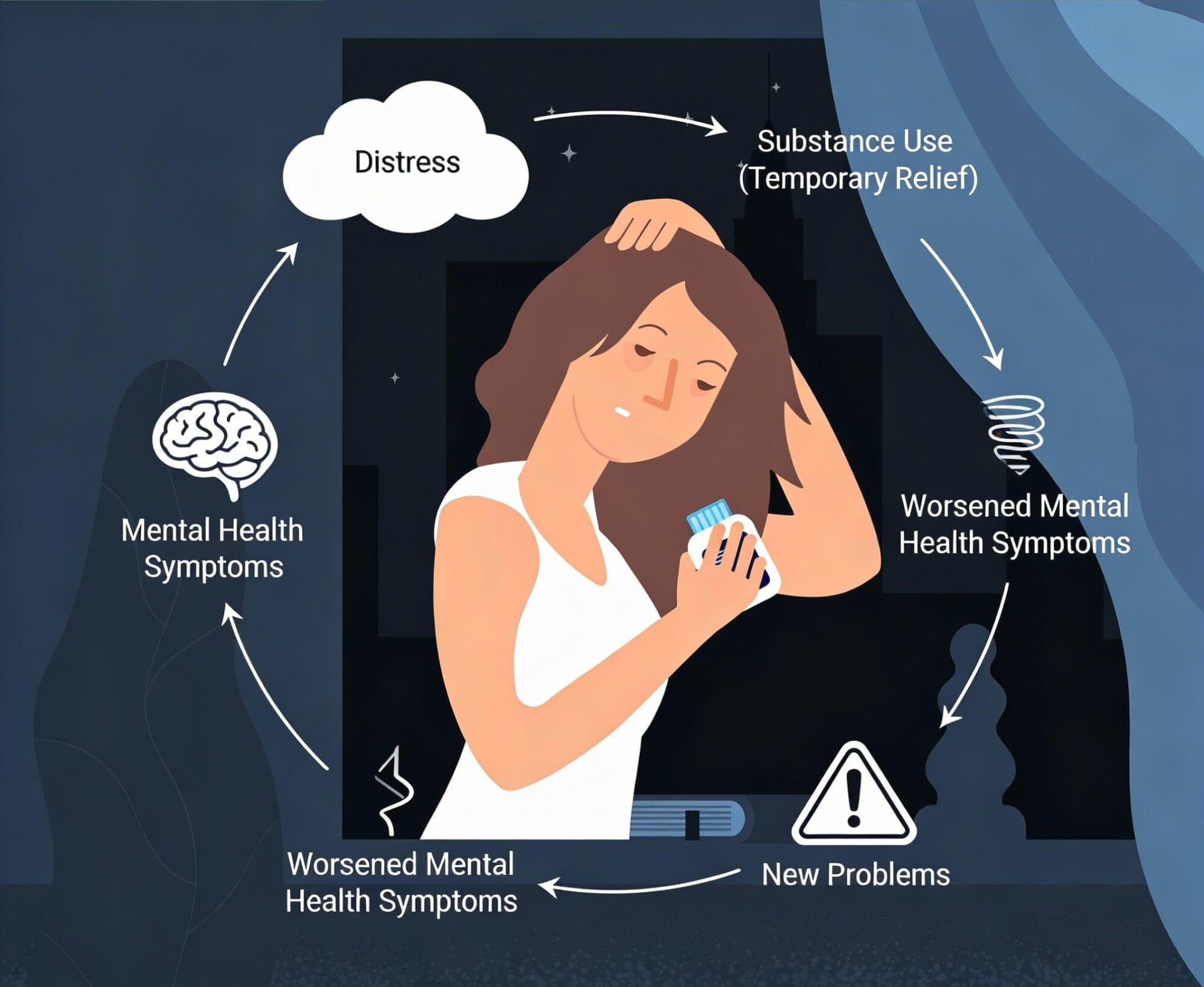
Heading: How Grounding Disrupts the Relapse Cycle
Grounding skills interrupt this cycle. Specifically, grounding provides a third option when distress peaks. Instead of enduring unbearable discomfort, you can use grounding. Similarly, instead of seeking chemical relief, grounding offers a solid alternative. Therefore, it addresses the immediate crisis while protecting long-term recovery goals.
Also, many people with substance use histories struggle with disconnection. For example, they may feel dissociation or depersonalization. They might feel disconnected from their bodies. These experiences may have developed as survival methods during trauma. Alternatively, they could be results of substance use itself. However, grounding specifically targets these disconnection experiences and helps rebuild the mind-body connection. This connection is needed for lasting recovery and emotional health.
This approach becomes especially valuable during high-risk situations. For instance, grounding helps during cravings or exposure to triggers. Additionally, it works during conflicts with others. Similarly, grounding helps when processing difficult emotions in therapy. Having practiced grounding techniques creates a portable tool that doesn’t require outside resources, other people, or specific places.
“Multiple national population surveys have found that about half of those who experience a mental illness during their lives will also experience a substance use disorder and vice versa” (National Institute on Drug Abuse, 2020, para. 1). (ncbi.nlm.nih.gov)
Core Grounding Techniques: Physical and Sensory Methods
Grounding approaches divide into several categories. Each category engages different pathways to present-moment awareness. Physical and sensory grounding methods use your five senses to anchor attention in solid, immediate reality.
Temperature-Based Grounding Methods
Temperature provides one of the most powerful sensations. This is because heat sensors send immediate signals to the brain. These signals demand attention. Techniques include holding ice cubes in your hands. Similarly, splashing cold water on your face works well. Additionally, you can try taking a cold shower. Another option is placing a cool cloth on the back of your neck. The intense feeling interrupts emotional waves and brings your attention fully to the present moment.
On the other hand, warmth can provide relief through different methods. For example, holding a hot drink offers comfort. Similarly, taking a warm bath works well. You can also use a heating pad. The choice between cold and warm depends on your current state and what provides the best shift of attention.
Texture and Touch Grounding Methods
Engaging your sense of touch through varied textures creates sensory anchoring. Keep objects easy to reach. For example, keep a smooth stone nearby. Similarly, have textured fabric, a stress ball, or piece of velvet available. When distress rises, hold the object. Then, focus completely on its physical properties. Notice temperature, weight, texture, and shape. Additionally, notice how it feels against different parts of your hand.
Progressive muscle relaxation also provides touch-based centering. Specifically, you tense and release muscle groups step-by-step throughout your body. This technique creates awareness of physical sensations while releasing tension that builds up during stress.
Movement and Physical Activity for Grounding
Deliberate physical movement anchors you in your body and interrupts rumination. Options include walking while noticing each footstep. Similarly, stretching with attention to how muscles lengthen provides stability. Additionally, doing brief intense exercise like jumping jacks works. You can also practice yoga poses that require balance and focus.
The key difference between mindful movement and simple distraction lies in awareness. Rather than exercising to escape discomfort, mindful movement involves full attention to physical sensations. Therefore, it creates present-moment focus while shifting physical states.
Sensory Grounding Through Observation
The “5-4-3-2-1” technique step-by-step engages multiple senses. First, identify five things you can see. Next, find four things you can touch. Then, notice three things you can hear. After that, identify two things you can smell. Finally, find one thing you can taste. This structured observation forces attention outward and interrupts internal emotional storms.
Similarly, focused observation of a single object provides centering through sustained attention. Choose any item around you. Then, examine it completely. Notice colors, shapes, shadows, and textures. Additionally, look for details you’ve never seen before. This practice builds concentration while anchoring awareness externally.
Mental and Cognitive Grounding Strategies
While sensory techniques redirect attention to physical experience, mental strategies work differently. Specifically, they engage thinking processes to create present-moment stability.
Mental Tasks
Engaging your thinking brain in structured tasks can help restart clear thinking. This works when emotions threaten to overwhelm you. Techniques include counting backwards from 100 by sevens. Similarly, naming all the states or countries you can remember provides focus. Additionally, listing items in a specific category works. For example, name animals or foods that start with each letter. Another option is reciting song lyrics or poems from memory.
These tasks work because they require concentration. They also require thinking resources. Therefore, it becomes hard to keep intense emotional focus at the same time. As a result, they create a path back to rational thinking. Furthermore, they don’t require direct contact with distressing content.
Reality Statements and Grounding
When disconnection or feeling unreal occurs, clearly stating facts helps. Specifically, stating factual information about your current reality restores your sense of place. This technique involves saying aloud or thinking to yourself certain things. For example, state your name and your age. Similarly, say today’s date and where you are now. Additionally, recall what you did this morning. Also, think about what you plan to do next. These reality statements fight feelings of unreality by stating solid, provable facts.
For people with trauma histories, adding clear safety statements can improve effectiveness. For example, say: “I am safe right now.” Similarly, remind yourself: “That was then, this is now.” Additionally, state: “I am in my apartment, and nothing bad is happening in this moment.” These statements anchor you firmly in the present.
Perspective Shifts
Creating distance from overwhelming emotions through third-person narrative can provide stability. Specifically, describe what’s happening to you as if you were a neutral observer. Alternatively, narrate like a documentary narrator. For example: “She is sitting on the couch feeling anxious. Her heart is racing. She’s having thoughts about using. However, she has experienced these feelings before. Furthermore, she has gotten through them. She is choosing to practice her skills.”
This technique uses a thinking strategy that helps regulate emotions. Specifically, it creates perspective on your experience. Therefore, you’re not fully caught up in it.
Building Grounding Skills Into Your Recovery Routine
Knowing these techniques provides little benefit by itself. You must be able to access and use them during actual moments of distress. Therefore, effective integration requires deliberate practice, preparation, and troubleshooting common obstacles.
Practice Grounding During Calm Emotional States
The most critical principle sounds backward. Specifically, practice when you don’t need it. Trying to learn new skills during crisis rarely works. This is because stress hurts learning and memory. Instead, practice different techniques during calm states. Similarly, practice during neutral emotional states. Then, explore which methods connect most strongly with you.
Create a practice routine. Spend five to ten minutes daily trying different approaches. Notice which methods grab your attention best. Additionally, notice which feel natural or comfortable. This exploration builds familiarity and creates neural pathways. As a result, these pathways become accessible when distress strikes.
Create a Personalized Grounding Kit
Gather physical tools that help with these practices. Then, keep them easy to reach in multiple places. Your kit might include ice packs and stress balls. Similarly, add textured objects, photos, or essential oils. Additionally, include cards listing specific techniques. Having these items immediately available reduces barriers, allowing you to use them during crisis moments.
Think about creating different kits for different places. For example, make one kit for home. Similarly, create one for work or school. Additionally, make a portable version for your car or bag. Having these items around acts as practical resources and serves as visual reminders of your commitment to healthy coping.
Link to Trigger Awareness
These skills work best as an early intervention. In other words, don’t use them as a last resort. Build awareness of your personal warning signs. These signs show that distress is building. For example, watch for physical feelings like tension. Similarly, notice changes in breathing. Additionally, track emotional shifts like irritability or numbness. Watch for behavior changes like isolation or restlessness. Furthermore, notice thinking patterns like obsessive thoughts or catastrophizing.
When you notice these early warnings, use the techniques right away. Don’t wait until emotions peak. This early approach prevents the buildup. As a result, coping becomes easier. Furthermore, relapse becomes less likely.
Address Common Implementation Challenges
Several obstacles frequently interfere with effectiveness. Therefore, planning for these challenges in advance helps. As a result, you increase your likelihood of successful implementation.
Resistance and skepticism: These techniques may seem too simple. You might think they can’t address intense distress. However, remind yourself that simplicity doesn’t equal ineffectiveness. The goal isn’t permanent fix. Rather, it aims for immediate distress reduction. Therefore, it helps you avoid harmful coping behaviors.
Trouble keeping focus: If your mind quickly wanders from attempts, don’t worry. This shows the strength of emotional pull. However, it doesn’t mean failure. Gently bring attention back to the focus as many times as needed. Furthermore, treat each shift back as part of the practice. Therefore, don’t view it as proof of failure.
Physical limits: Some techniques may not be possible. This might be due to physical disabilities. Similarly, sensory processing differences can interfere. Additionally, environmental limits might prevent certain methods. Therefore, develop a diverse repertoire. As a result, multiple options remain available regardless of circumstances.
Severe disconnection: Severe disconnection may hurt your ability to start practices independently. In these cases, having trusted support people helps. Specifically, they can talk you through techniques. Alternatively, they can help you use them. Therefore, this provides key help during severe episodes.
Grounding as Part of Comprehensive DBT Practice
While these skills offer powerful quick benefits, they work even better when combined with other DBT approaches. Additionally, they work better with complete treatment. This is one tool within distress tolerance. Furthermore, distress tolerance itself makes up one quarter of the DBT framework.
The complete distress tolerance module includes crisis survival strategies. For example, it includes these techniques, self-soothing, and distraction. Additionally, it includes reality acceptance skills. These help you build long-term tolerance for uncomfortable emotions. These skills work together with mindfulness practices. Mindfulness builds present-moment awareness. Similarly, emotion regulation strategies help you understand emotional experiences. Furthermore, they help you control emotional experiences. Interpersonal effectiveness techniques improve relationships and communication.
For people with substance use disorders, complete DBT treatment typically involves multiple parts. First, there are individual therapy sessions. Additionally, there are skills training groups. Phone coaching provides between-session support. Furthermore, therapist consultation teams offer guidance. In this structure, these techniques become both a standalone approach and a starting point. Therefore, they lead into broader emotional regulation abilities.
As you develop proficiency, you may notice that the skill itself changes. Initially, it might feel mechanical. Similarly, it might require significant effort. However, with regular practice, it becomes more automatic. Furthermore, it becomes more accessible. Eventually, it needs less conscious attention to use effectively. This progress shows real skill development. Additionally, it shows neuroplasticity. In other words, your brain is adapting to new coping patterns.
Professional Support
While these techniques can be practiced on your own, professional support helps. Specifically, structured support speeds up skill development. Furthermore, it ensures proper use during critical moments. Resa Treatment Center offers complete DBT skills training. This includes grounding through Intensive Outpatient and Standard Outpatient programs. These programs are designed for people with substance use disorders, mental health conditions, and co-occurring disorders.
Treatment at Resa includes these methods within complete distress tolerance modules. Additionally, treatment combines proven approaches. For example, it includes CBT, DBT, and Motivational Interviewing. Furthermore, treatment offers personalized planning and real-world skills practice. Rolling admission allows patients to start within days. Therefore, you can access structured group sessions where techniques are taught. Additionally, they are practiced and strengthened alongside peers facing similar challenges. Crisis support, safety planning, and medication-assisted treatment options provide complete resources. These go beyond learning skills. Instead, they address underlying conditions contributing to trouble controlling emotions.
Professional guidance helps solve problems with using techniques. Additionally, it helps adjust methods to individual needs. Furthermore, professionals help combine approaches within broader recovery plans. For those seeking proven care, structured outpatient programming offers key support. Specifically, it provides accountability, expertise, and community support. As a result, this turns ideas into real abilities for managing distress effectively.
Your Path to Effective Distress Management
This skill changes distress from an unmanageable crisis into a handleable experience. This happens through deliberate practice. Each successful implementation strengthens your capacity. Specifically, it helps you remain present during emotional intensity. These skills feel awkward initially. However, they become intuitive with repetition and patience. Your commitment to practicing techniques today builds the strong foundation. Therefore, it supports long-term recovery.
FAQs – Frequently Asked Questions
What Is Grounding In DBT?
Grounding is a DBT distress tolerance skill. It anchors you to the present. Additionally, it helps you ride out intense emotions. Therefore, you can avoid harmful coping behaviors.
How Do These Skills Reduce Emotional Overload?
Triggers activate the threat system. They also hijack rational thinking. However, these techniques engage sensory pathways. As a result, they lower arousal. Furthermore, they restore present-focused control.
Which Techniques Use The Senses?
Try temperature shifts like ice or cold water. Alternatively, use a warm drink. Additionally, use textures and movement. The 5-4-3-2-1 observation exercise also works well.
How Does This Help With Substance Use Triggers?
It interrupts craving cycles. Specifically, it shifts attention to concrete sensations. Therefore, it offers an immediate alternative. As a result, you don’t need substances during high-risk moments.
When Should I Practice These Skills?
Practice daily during calm periods. This builds reliable access under stress. Additionally, use them early. Specifically, use them when noticing personal warning signs of escalation.
Does Resa Teach This In Its Programs?
Yes, Resa integrates grounding within DBT distress tolerance training. These skills are practiced in IOP and OP. Additionally, they are taught alongside CBT and Motivational Interviewing.
Who Can Access Resa’s Outpatient DBT Services?
Adults 18 and older can enroll in IOP or OP programming. Additionally, Resa welcomes people with co-occurring conditions. Furthermore, Resa serves people from diverse backgrounds.