Recovery from substance use and mental health issues needs more than willpower. In fact, it requires practical tools. These tools address the physical roots of stress, cravings, and emotional problems. Diaphragmatic breathing is one of the most powerful tools in Cognitive Behavioral Therapy. However, it’s also one of the most underused. This simple practice can change how your nervous system responds to triggers, anxiety, and distress.
This basic relaxation skill offers something remarkable for people in recovery. It gives you immediate relief that you carry everywhere. Unlike many therapy methods that need specific settings or long commitments, diaphragmatic breathing controls your body’s stress response on demand. Furthermore, it creates space between impulse and action when you need it most.
[Content is meant for educational purposes only, and not a substitute for diagnosis or treatment. If safety concerns or severe medical symptoms arise, contact emergency services immediately.]
Table of Contents
Five Quick Takeaways
- Diaphragmatic breathing directly calms the automatic nervous system.
- Longer exhales strengthen calming activation and relaxation response.
- Practice twice daily to build reliable, automatic control skills.
- Use during cravings to create space for healthier decisions.
- Combine with CBT and mindfulness for stronger treatment outcomes.
Understanding the Breath-Body-Mind Connection
Your breathing pattern serves as a direct link. It connects your conscious mind to your automatic body systems. These systems control everything from heart rate to digestion. When you experience stress, cravings, anxiety, or traumatic memories, your body automatically shifts to shallow, rapid chest breathing. This pattern evolved as a survival tool. It prepares you for immediate physical danger. It does this by turning on your body’s emergency response system.
However, the challenge for people with substance use and mental health issues is different. This stress response often stays on all the time. Past trauma, ongoing stress, withdrawal symptoms, and brain changes from substance use create constant nervous system arousal. As a result, your body stays in a high alert state. This happens even when no real threat exists. This leads to the familiar pattern of anxiety, irritability, sleep problems, and intense cravings. Together, these can derail recovery efforts.
How Diaphragmatic Breathing Resets The Stress Response
Fortunately, diaphragmatic breathing interrupts this cycle. It does this by turning on your body’s natural calming system. When you breathe deeply using your diaphragm—the large muscle beneath your lungs—you send a direct signal to your brain. The signal says you are safe. This isn’t just wishful thinking. In fact, it’s real body science. Deep diaphragmatic breathing turns on the vagus nerve. This is a key pathway. It reduces heart rate, lowers blood pressure, and decreases stress hormones. It shifts your entire nervous system toward calm focus. This replaces reactive high alert.
For people in recovery, this physical shift creates something valuable. It creates mental space. That critical moment between experiencing a trigger and responding to it expands. This allows thinking skills and healthy coping strategies to come online. They arrive before automatic patterns take over. Moreover, research shows that people who master diaphragmatic breathing have better results. They show improved emotion control. They have decreased anxiety and depression symptoms. They experience reduced craving intensity. They also have better overall treatment outcomes.
The Science Behind Diaphragmatic Breathing in Recovery
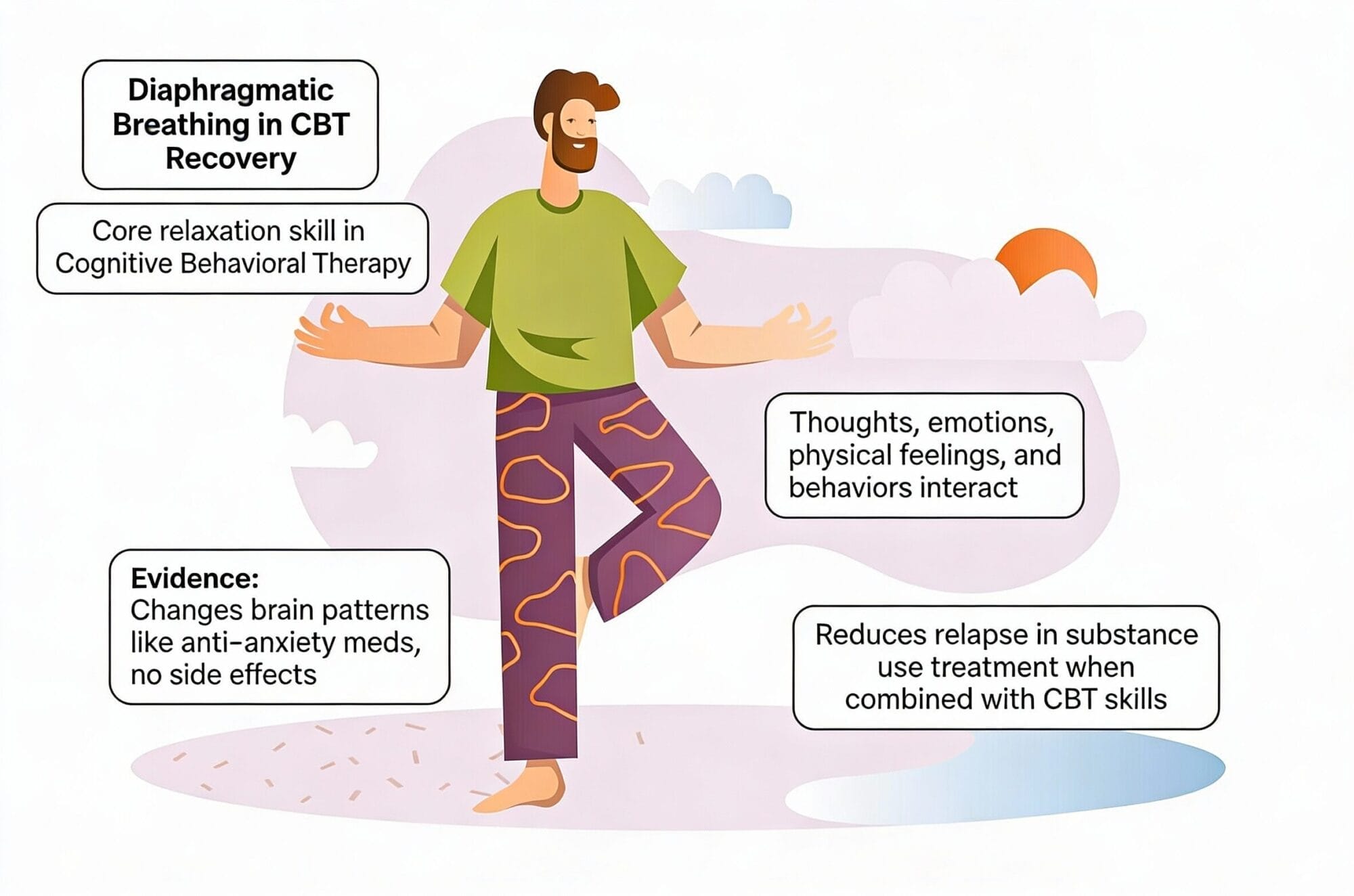
Within Cognitive Behavioral Therapy, diaphragmatic breathing serves as a core part of relaxation training. This is one of the basic skill sets. It supports broader therapy work. CBT recognizes that thoughts, emotions, physical feelings, and behaviors all interact. You cannot directly control your emotions or remove cravings through sheer determination. However, you can step in at the physical level. Then, this influences your emotional and mental experience.
The evidence supporting diaphragmatic breathing for mental health and addiction recovery is strong. Studies looking at people with anxiety disorders show important results. Regular practice of diaphragmatic breathing produces changes in brain patterns. These patterns are similar to those seen with anti-anxiety medications. However, it comes without side effects or addiction potential. Research with people in substance use treatment shows that using breathing techniques reduces relapse rates. This is especially true when combined with other CBT skills. These skills include challenging distorted thoughts and increasing activities.
How It Works In The Brain And Body
The process involves multiple connected systems. First, deep breathing increases oxygen levels. This improves the function of your prefrontal cortex. This is the brain region responsible for impulse control. It handles decision-making and emotion control. These thinking functions are often weakened in people with substance use and mental health conditions. As a result, thoughtful choice-making becomes difficult when it matters most. By improving oxygen delivery to the prefrontal cortex, diaphragmatic breathing boosts your capacity for self-control. It also improves rational thinking.
At the brain chemistry level, the practice influences several systems. These systems are related to recovery. The activation of your body’s calming system triggers release of brain chemicals. These chemicals are linked to calm and wellbeing. This provides a natural balance. It counters the disrupted reward and stress systems. These are common in addiction and mental health disorders. In addition, regular practice appears to support brain change. This is the brain’s ability to form new pathways. This helps develop healthier response patterns. Eventually, these can become automatic.
“Psychoeducation combines the elements of cognitive-behavior therapy, group therapy, and education. The basic aim is to provide the patient and families knowledge about various facets of the illness and its treatment so that they can work together with mental health professionals for a better overall outcome” (Sarkhel et al., 2020, p. S319). (PMC)
Perhaps most importantly for people with multiple disorders, diaphragmatic breathing addresses a common core issue. That issue is nervous system imbalance. Whether you’re managing post-traumatic stress, depression, anxiety, or the brain effects of substance use, your automatic body systems likely struggle. They struggle to keep proper balance between on and off. Diaphragmatic breathing provides direct control of this system. In other words, it serves as a reset button. You can activate it whenever needed.
Learning the Technique: From Theory to Practice
Understanding diaphragmatic breathing in your mind is very different from doing the practice in your body. Many people discover they’ve been breathing wrong for years. They mainly use chest muscles rather than using the diaphragm. This pattern, while common, keeps stress in the body. It also limits the calming potential of your breath. Learning proper diaphragmatic breathing requires patience and practice. However, the technique itself is simple.
Step By Step Diaphragmatic Breathing
First, begin by finding a comfortable position. You can either sit with your back supported or lie down. Next, place one hand on your upper chest. Place the other hand on your belly, just below your ribcage. This touch feedback helps you recognize the difference. It shows the difference between chest breathing and diaphragmatic breathing. As you breathe normally for a moment, notice which hand moves more. If your chest hand rises a lot while your belly stays mostly still, you’re mainly using chest breathing.
To engage diaphragmatic breathing, inhale slowly through your nose. Direct the breath downward. Your belly should expand outward against your hand. Your chest should stay mostly still while your belly rises. Imagine filling your belly with air. Picture it like a balloon expanding. This expansion shows that your diaphragm is pulling downward. This creates maximum space in your lungs for oxygen intake. The breath in should feel smooth and comfortable. It should last about four to five seconds.
After breathing in fully, pause briefly. Don’t force or strain. Then, exhale slowly through your mouth or nose. Use whichever feels more natural. Allow your belly to fall inward as air leaves your lungs. The breath out should last slightly longer than the breath in. Aim for about six to seven seconds. This longer exhale especially activates your body’s calming system. It deepens the relaxation response. Complete the breath by pausing briefly. Then begin the next breath in cycle.
Practice Routine And When To Use It
Initially, practice in a quiet place. Choose somewhere you can focus fully on the technique. Avoid distraction. Many people find that practicing diaphragmatic breathing for five to ten minutes twice daily builds the foundation. This helps you use this skill in challenging situations. Morning practice can set a calm tone for the day. Meanwhile, evening practice can improve sleep quality. This is a common challenge in recovery. As the technique becomes familiar, you’ll develop the ability to shift into diaphragmatic breathing quickly. You can use it even in stressful situations.
Troubleshooting Common Breathing Challenges
Common challenges include feeling lightheaded at first. This usually means breathing too quickly or too deeply. If this happens, slow your pace. Also, reduce breath depth slightly. Some people experience emotional release during breathing practice. This is especially true for those with trauma histories. This response is normal. Breathing can unlock held tension and emotion. If it feels overwhelming, simply return to normal breathing. Instead, consider practicing in shorter sessions. You might also want therapy support.
Using This Skill in Real-World Recovery
The true value of diaphragmatic breathing appears when you use it in real-world recovery situations. This skill becomes a portable tool. You can use it when challenges arise. As a result, it creates space for healthier choices. This works even in high-risk scenarios.
Applying It: Cravings, Anxiety, Trauma, Sleep
For craving management, diaphragmatic breathing offers immediate support. It helps during those critical minutes when urges peak. Cravings typically follow a wave pattern. They rise in intensity. Then they naturally drop if you don’t act on them. During this window, shifting into diaphragmatic breathing does several things at once. First, it takes up your attention. This disrupts the mental obsession. This obsession often comes with cravings. Second, it reduces the physical arousal. This arousal makes urge strength worse. Most importantly, it activates your prefrontal cortex. This brings thinking control online. This allows you to access other coping strategies. For example, you can play the scenario forward. You can call your support network. You can also do alternative activities.
Anxiety And Panic Control
When anxiety symptoms emerge—whether general worry, social anxiety, or panic responses—diaphragmatic breathing serves as a first tool. Anxiety exists partly as a physical state of high alert. You cannot fully experience panic or severe anxiety while at the same time turning on calm through deep breathing. The technique doesn’t remove anxious thoughts. However, it prevents those thoughts from growing into overwhelming physical panic. For people with both anxiety disorders and substance use issues, this difference matters a great deal. You gain the ability to experience anxious thoughts without becoming physically overwhelmed. As a result, this reduces reliance on substances for anxiety relief.
“Cognitive behavioral therapy for anxiety typically includes core components such as exposure, cognitive restructuring, and psychoeducation, although there can be variability in the application of core components across CBT protocols” (Lawson et al., 2023, p. 1). (Frontiers)
Grounding For Trauma And Flashbacks
In trauma work, especially for people with PTSD or complex trauma histories, diaphragmatic breathing provides grounding and stability. Trauma survivors often experience losing touch with reality or flashbacks when triggered. They lose connection to the present moment. Conscious breathing anchors awareness in your body. It brings attention to the immediate, safe reality of your current setting. The practice signals safety to a nervous system trained to expect danger. Over time, this gradually builds ability. It helps you process traumatic material in therapy without becoming overwhelmed.
For depression management, especially the mix of low motivation and high negative thinking common in depression, diaphragmatic breathing offers an accessible starting strategy. Depression often includes shallow breathing patterns. These patterns keep low energy and foggy thinking. On the other hand, intentional deep breathing increases oxygen and energy levels. This creates slightly more capacity for doing active tasks. This is the depression treatment strategy of gradually increasing meaningful activities. The practice also stops negative thinking cycles. It does this by redirecting attention to a concrete, present moment experience.
Sleep problems affect nearly everyone in early recovery. This happens whether from withdrawal effects, anxiety, racing thoughts, or disrupted sleep patterns. Long-term substance use creates these disrupted patterns. Practicing diaphragmatic breathing before bed and when lying awake triggers the relaxation response. This helps sleep start. The technique is especially valuable. This is because it addresses both the physical high alert and the anxious thoughts about not sleeping. These often continue insomnia.
Putting Diaphragmatic Breathing into Your Recovery Plan
While diaphragmatic breathing provides immediate benefits, its greatest value appears through consistent practice. This changes the technique from a conscious skill into an easy resource. Think of it as physical therapy for your nervous system. Just as healing an injury requires regular exercise beyond the sharp pain, retraining your stress response system requires ongoing practice. You need to practice even when you feel relatively stable.
Daily Practice That Sticks
First, establish a foundation through structured daily practice sessions. Even five minutes morning and evening creates real benefit. Use these sessions to improve technique. Also use them to deepen the relaxation response. Build comfort so the practice becomes easy. Many people find that setting specific times for practice increases consistency. Consider linking your practice to existing routines. For example, practice right after waking. Or practice just before meals. This creates a natural habit structure.
Prepare For High-Risk Moments
Beyond scheduled practice, identify high-risk situations. These are situations where you’ll use diaphragmatic breathing as an immediate tool. These might include specific triggers for substance use. They might include challenging social situations. They could be anxiety-causing environments. Or they might be times when cravings typically get worse. Developing a specific if-then plan increases the chance you’ll actually use the skill when needed. For example: “If I feel a craving after my shift ends, then I will do three minutes of diaphragmatic breathing before leaving the parking lot.”
Combine Breathing With CBT Skills
Next, combine diaphragmatic breathing with other CBT skills. This creates better results. The technique pairs naturally with challenging distorted thoughts. This is the process of finding and fixing thinking errors. When you notice unhelpful thinking patterns, begin with several cycles of diaphragmatic breathing. This calms your nervous system. Then engage in the thinking work. The physical control makes rational thinking more accessible. Similarly, use breathing to anchor mindfulness practice. Bring repeated attention to the feeling of breath as a focus point. The combination strengthens both skills at the same time.
Use Breathing In Exposure Work
For people working with therapists, discuss adding diaphragmatic breathing into exposure therapy. This applies to therapy for anxiety disorders or trauma work. The breathing technique provides a stability tool. This allows you to approach anxiety-causing situations or traumatic memories. This helps you keep enough control to process the material in a helpful way. Many proven treatment methods include breathing control as a safety skill. They do this before beginning exposure work.
Track Practice And Results
Finally, track your practice and its effects. This helps keep motivation and identify patterns. A simple log noting when you practiced, for how long, and any observed effects creates accountability. Track effects on mood, cravings, anxiety, or sleep. It also shows the technique’s impact. Many people find that clear data about their progress keeps commitment. This is true during periods when practice feels boring. It also helps when they question whether it’s making a difference.
Building Long-Term Nervous System Strength
The ultimate goal goes beyond using diaphragmatic breathing as a crisis tool. Regular practice gradually retrains your nervous system’s baseline function. It shifts from constant high alert toward greater flexibility and balance. This basic change supports recovery in ways that go far beyond the specific moments you consciously practice the technique.
“Although it is commonly believed that psychoeducation interventions are ineffective, this meta-analysis revealed that brief passive psychoeducational interventions for depression and psychological distress can reduce symptoms” (Donker et al., 2009, p. 1). (PMC)
How Practice Rewires Stress And Emotion Circuits
Brain research shows that consistent breathing practice rebuilds the pathways. These pathways are involved in stress response and emotion control. Over weeks and months, your nervous system becomes less reactive to triggers. It becomes more capable of self-soothing. It also becomes better able to keep balance. This happens despite challenging circumstances. This isn’t about achieving permanent calm. It’s not about removing all stress responses. Instead, it’s about developing a nervous system that can turn on properly when needed. Importantly, it can return to baseline rest when threats pass.
Lowering Relapse Risk Through Better Balance
For people with substance use disorders, this baseline shift changes the recovery landscape a great deal. Much of the difficulty in staying sober comes from an overactive stress response. This makes normal daily challenges feel overwhelming. This increases the desire to escape through substance use. As your nervous system becomes more balanced through consistent diaphragmatic breathing practice, typical stressors become more manageable. Therefore, this reduces relapse risk. You develop internal capacity for distress tolerance. This is one of the core abilities that separates lasting recovery from chronic relapse patterns.
Building Emotional Clarity And Response Accuracy
The practice also supports emotional detail. This is the ability to identify and tell apart different emotional states. Many people enter treatment with limited emotional words. They typically describe feelings in broad categories. These categories include “good,” “bad,” “stressed,” or “fine.” This emotional dulling often comes from both the numbing effects of substance use and the overwhelm of trying to process complex emotions. You need proper control skills for this. As diaphragmatic breathing practice improves your capacity to tolerate emotional experience without becoming overwhelmed, you naturally develop greater ability. You can identify specific emotions. You understand their messages. You respond properly rather than reacting automatically.
Resa Teaches You Diaphragmatic Breathing
At Resa Treatment Center, diaphragmatic breathing isn’t taught alone. Instead, it’s part of complete, evidence-based treatment. This treatment addresses substance use, mental health, and co-occurring disorders. Our skilled clinicians guide you through personalized CBT relaxation training. This happens within structured Intensive Outpatient and Standard Outpatient programs. These programs are for adults 18 and older.
What makes our approach different is the combination of expert teaching with real-world practice. You’ll learn diaphragmatic breathing through live demonstration and guided practice. Then, you’ll receive structured homework assignments. These build mastery between sessions. Our therapists help you identify your specific high-risk situations. They develop plans matched to your unique triggers and recovery goals.
With rolling admission and program starts within 2-4 days of intake, you can begin building these basic skills quickly. This happens when motivation is highest. Whether you’re managing anxiety, navigating early recovery, or addressing co-occurring conditions, our individualized treatment planning ensures breathing techniques fit smoothly with your broader therapy work. This includes challenging distorted thoughts, DBT skills, trauma work, and medication management when appropriate.
Recovery requires more than information. It needs skilled guidance, structured practice, and compassionate support. These help you turn knowledge into real ability.
Moving Forward: Your Breath as Recovery Ally
Your breath remains your most reliable ally throughout recovery. It’s available in every moment of challenge or calm. Diaphragmatic breathing provides the physical foundation. This foundation allows other therapy methods to take root and grow. Start with one conscious breath today. Then another tomorrow. You’ll be building the brain pathways that support lasting wellness. The journey from knowledge to mastery unfolds one intentional breath at a time.
FAQs – Frequently Asked Questions
What Is Diaphragmatic Breathing In Recovery?
Diaphragmatic breathing uses the diaphragm to control your body’s stress response. It supports recovery by shifting arousal from high alert to calm focus.
How Does It Affect The Nervous System?
Deep breathing stimulates the vagus nerve. It turns on your body’s calming system. This lowers heart rate and stress hormones. It also promotes balanced nervous system function.
Can It Reduce Cravings And Triggers?
Cravings peak and fall like waves if you do not act. Diaphragmatic breathing reduces high alert. It brings thinking control online for healthier choices.
How Do I Practice It Correctly?
Place one hand on your chest and another on your belly. Breathe in through your nose for four seconds. Your belly should rise. Breathe out for six to seven seconds. Your belly should fall.
How Often Should People Practice?
Practice five to ten minutes twice daily. This builds automatic skill. Use if-then plans to use diaphragmatic breathing during triggers and high-risk situations.
How Does Resa Put Breathing Into Care?
Resa teaches diaphragmatic breathing within CBT, DBT, and Motivational Interviewing. It includes structured homework. Programs start within two to four days. They offer in-person IOP and OP.
Who Can Join Resa Programs For This Skill?
Adults 18 and older with co-occurring conditions can enroll for integrated care. Adolescents 12 to 17 are not eligible. However, many populations are welcomed.